 CraveIt
Now in testing for iPhone · not yet on the App Store
Your cycle, your cravings, understood.
A women-centred approach to the cycle, cravings, nutrition and everyday wellbeing — helping you notice patterns, not chase rules.

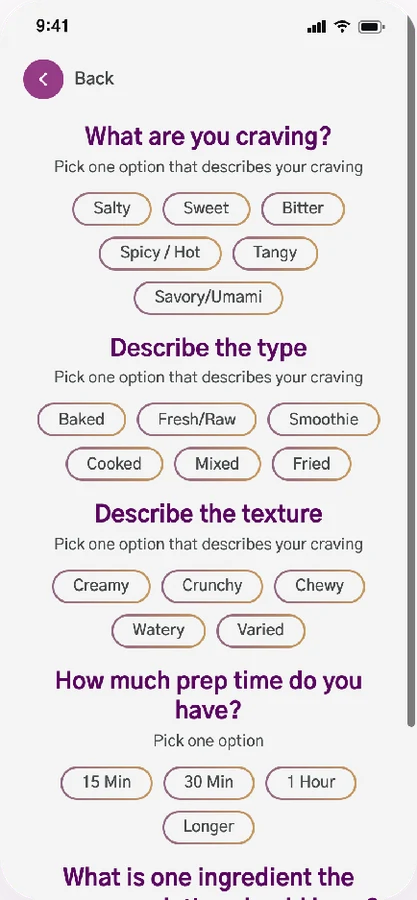
What are you craving?
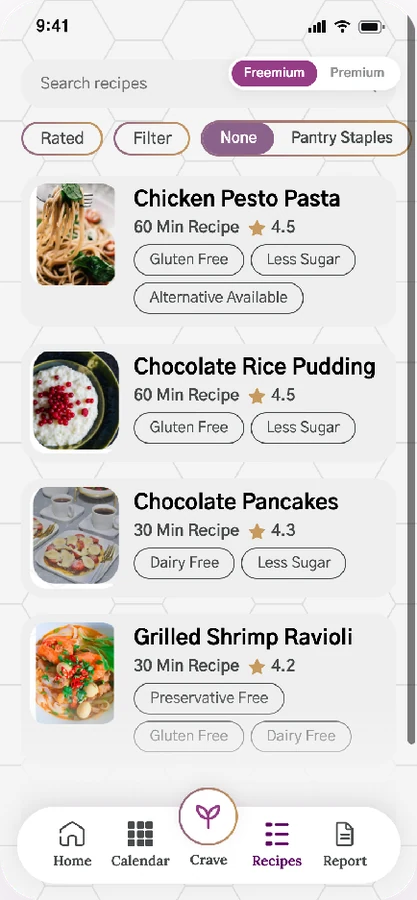
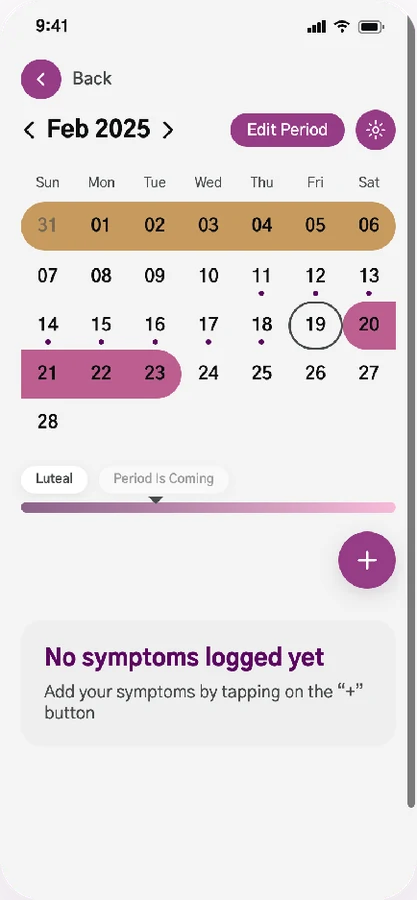
In your luteal phase? Many people notice sweeter cravings — here are recipes to try.
Why we are building it
Women are given fragments of information about their bodies, nutrition and menstrual health — and far less support in connecting those pieces to their lived, everyday experience.
Our mission is to create a trusted, human-centred and evidence-informed space where women can understand their own patterns and cravings better — in order to make more informed and supportive food and wellbeing choices. We believe our bodies give us signals, and CraveIt helps you learn to listen.
We want food to remain food — something to be enjoyed, connected with and embraced — while still recognising its role in nutritional wellbeing.
The focus is forward: to uplift and to support.
About CraveIt
Support that lives between consultations.
CraveIt is a women's health and nutrition mobile app centred on the menstrual cycle, cravings, food preferences and limitations, connecting all these dots for everyday wellbeing.
Women can be diagnosed by professionals and given specific meal plans or “cuts”, but aren't always supported in the everyday process. CraveIt fills that gap with gentle guidance.
It is designed to help women create body awareness, notice patterns and understand their own bodies better, rather than prescribe a single blanket rule for what healthy should look or feel like.
CraveIt understands that context matters — whether it be allergens, lifestyle diets, reproductive disorders or personal preferences. Being able to take the whole picture into account is at the heart of the mission — customisation, for every body.
We are not trying to replace clinicians. We are building the layer of support that exists between consultations.
“Helping women observe, reflect, learn — and arrive at better questions about their own bodies.”
What CraveIt is
Five capabilities, one experience.
Designed to work together rather than as five separate apps.
Cycle-Aware
Your cycle recorded alongside a host of symptoms, diary entries, lifestyle factors and cravings.
Food-Aware
Cravings, food preferences, limitations or specific diets all filtered in context — brought forward to enjoy.
Guidance-Led
Relevant nutritional and recipe guidance, shaped by what you choose to share.
Whole-Person
Nutrition sits alongside menstrual and everyday wellbeing rather than isolated from it.
Clinically Conscious
Designed to support evidence-informed education and decision-making, while holding a clear boundary between general guidance and medical diagnosis or treatment.
How the experience connects
Notice. Record. Understand. Act.
CraveIt joins three things a woman already knows about herself — and returns what may be relevant.
Notice
What she is experiencing — symptoms, mood, digestion, sleep.
Record
What she is craving or interested in eating, on her own terms.
Understand
What may be relevant to her cycle, stated goals, conditions and dietary preferences.
Act
Nutrition and recipe guidance she can use today — and better questions for her clinician.
CraveIt is being shaped together with the health professionals we are bringing on board. Cycle predictions are estimates, and every recommendation is general nutrition support — not a diagnosis, treatment or substitute for care.
Inside the app
Built around how you actually live.
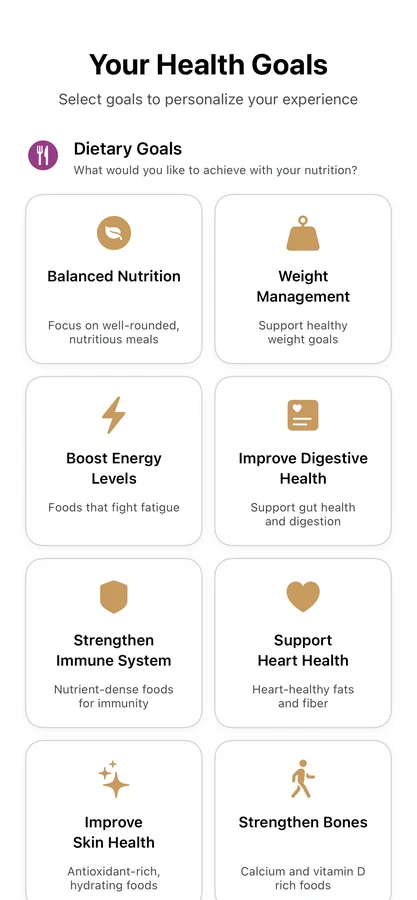
Screens from our design and user-experience work. The app in testing has moved on in places.
Our philosophy
Food should be celebrated, explored and supportive.
What We Move Away From
- A calorie counter at the centre of the experience.
- A requirement to continually quantify food.
- A visual standard for what a woman's body is supposed to look like.
- Blanket rules applied to every woman's health.
What We Make Room For
- Curiosity and intuition alongside structured guidance.
- Understanding her experiences instead of fearing them.
- Deep customisation across health, cycle and personal goals.
- Encouragement toward appropriate professional care.
Holistic by design
One experience, not five apps.
The Market Today
Most products are built around one part of the picture — the cycle, or food, or symptoms, or recipes.
A woman has to download several apps to assemble a single picture of her own health.
Recommendations tend to apply a blanket rule to facets of health that are not the same for every woman.
Where CraveIt Sits
One holistic experience, with deeper customisation at the core of the product rather than tucked away in a setting.
Multiple factors — cycle, goals, conditions, dietary preference — are taken into account before anything is recommended.
The opportunity is integration, not another single-purpose tracker.
Boundaries we protect
Support alongside your care — never a replacement for it.
The lines we hold ourselves to — written down now, before there is pressure to loosen them, and the lines we are asking clinicians to hold us to.
CraveIt is not intended to diagnose disease or medical conditions.
It does not replace a dietitian, doctor, gynaecologist, psychologist or other qualified professional.
We will not imply that nutrition alone can independently treat complex reproductive or hormonal conditions.
We are working to make content clearly separate established evidence, plausible mechanisms and hypotheses.
Where symptoms may warrant assessment — a very long cycle or prolonged bleeding, for example — the app points her towards a clinician: escalation, not self-treatment.
Personalisation should improve relevance — never create an illusion of clinical certainty.
Please note: CraveIt is not a medical device and does not give medical advice. Cycle predictions are estimates, so don't use CraveIt to prevent a pregnancy or to plan one. Allergy and diet filters are a help, not a guarantee — if you have a food allergy, always check ingredients and product labels yourself. Talk to a healthcare provider about medical concerns or before changing your diet.
Privacy
Your data stays yours.
Cycle and symptom information is personal. We treat it that way.
- We never sell your personal information.
- Your health information is stored securely and privately.
- Delete your account and data from inside the app whenever you like — here's how.
- Read the full privacy policy.
Where we are today
- Testing PhaseUser experience, live
- Before End 2026Target launch
- South AfricaFirst market
On the Team Already
Product development, food research, design and technology — enough to build the experience and put it in front of real users. A dietitian is being brought on board to lead nutrition.
Still Being Developed
Recommendation logic, the research framework, and the clinical components that will decide how far the product is allowed to speak.
For clinicians and dietitians
The gap we are closing.
If CraveIt is going to earn trust in women's health, the information and language inside it need to withstand professional scrutiny.
What We Need to Strengthen
- Clinical and dietetic vetting of the information and terminology we use.
- Guidance on where evidence is established, emerging, mixed or insufficient.
- Review of how cycle symptoms and nutritional concepts are framed, so we never overstate causation.
- Input into safety boundaries, escalation points and referral language.
- Perspective on how real women experience these issues in practice.
- A clear view of where digital tools genuinely help — and where they can cause harm.
What we are asking for
We are looking for more than a sign-off. We want a clinical voice in the room while the product is still being shaped.
That means challenging assumptions, identifying blind spots, refining language, strengthening evidence standards — and helping us decide what should never be included.
A woman should feel more informed and more connected to her own experience after using CraveIt — not more anxious, judged or confused.
How Involvement Could Look
- Reviewing the language and claims inside the product
- Setting the evidence standard for what reaches users
- Defining safety flags and referral prompts
- Sitting in product decisions as a standing clinical advisor
- Shaping the future clinical and research components
Questions to Explore Together
- What would make you trust a digital women's health platform enough to recommend it to a patient?
- Which parts of the menstrual and nutrition conversation are underserved between consultations?
- Which common claims about hormones, cravings and nutrition should CraveIt actively avoid?
- Where should the app draw the line between useful education and clinical advice?
- What safety flags, referral prompts or review processes would you expect?
- How do we design for women as they actually live, rather than an idealised patient?
Reach out.
We would like the opportunity to meet in person to discuss a collaboration, or onboarding onto the team — a call after work hours works equally well if that suits your schedule better.
Start a conversation